Understand electronic invoicing: timetable, formats, e-reporting and a practical checklist for preparing your company for 2026-2027.
Electronic invoicing 2026-2027: the complete guide to preparing your company
Electronic invoicing is becoming the norm for every company. No, it is not (usually) rocket science. This article gives you a clear, practical roadmap for understanding the 2026-2027 deadlines, the formats, e-reporting and, above all, what you can do today so that the transition is smooth.
Understanding the reform: why electronic invoicing changes everything
Electronic invoicing is not just a new format: it is a change in how documents circulate. Sending a PDF by email as the main method is over. The flow becomes structured, automatable and usable by your accounting and tax tools, and by your sales tools too.
The result: fewer errors, faster processes and better visibility on cash flow.
The 2026-2027 timetable: who is concerned and when?
It is being rolled out in stages. The deadline, initially set for 2024, has been postponed. The new timetable targets a gradual rollout between 2026 and 2027.
Remember the principle: receiving first, issuing afterwards.
Phase 1 (target 2026): an obligation to receive, for everybody
From that stage, every company, whatever its size, will have to be able to receive invoices in electronic format. The obligation to issue them will apply to large companies and mid-sized firms.
Phase 2 (target 2027): an obligation to issue, for small and mid-sized companies
The obligation to issue electronic invoices will be extended to small and micro companies.
How does electronic invoicing work in practice?
To be compliant, the system relies on platforms and on standardised formats.
The platforms: PPF, PDP and OD explained
Three main options will be open to you for exchanging your invoices:
The public invoicing portal (PPF)
This is the State’s free solution. It will allow invoices to be received and issued.
Partner dematerialisation platforms (PDP)
These are private operators (Pennylane, for instance) registered by the State. They will offer enriched services: accounting integration, payment tracking, reconciliation, and so on.
Dematerialisation operators (OD)
These are the solutions that connect to the PPF or to a PDP in order to transmit the invoices. Your current invoicing software can become an OD if it is updated.
Accepted formats and mandatory fields
Invoices will have to be “structured” (readable by a machine) or “hybrid” (readable by a human and by a machine, like Factur-X). Check that your software produces and consumes those formats.
Every electronic invoice must contain the mandatory fields (the client’s company identifier, the nature of the operation, VAT where applicable, and so on). Also think about digital archiving (the legal retention period) and about security.
E-reporting: the essential complement to the reform
E-reporting complements electronic invoicing by covering the flows not invoiced electronically. It gives the tax authority a complete view of transactions.
That mainly concerns:
- Sales to private individuals (B2C).
- International sales (exports).
- Certain exempt operations.
You will have to transmit the data for those operations through the same platform you use for your electronic invoices.
Checklist: how to prepare your company without stress
- Map your flows: who are your customers (B2B / export / B2C)? What types of operation do you carry out?
- Take stock of your software: does your current ERP or invoicing tool handle structured formats? Is it “ready” for the reform?
- Choose your platform: PPF (free), PDP (services) or OD (integration)? Your choice will depend on your needs and your budget.
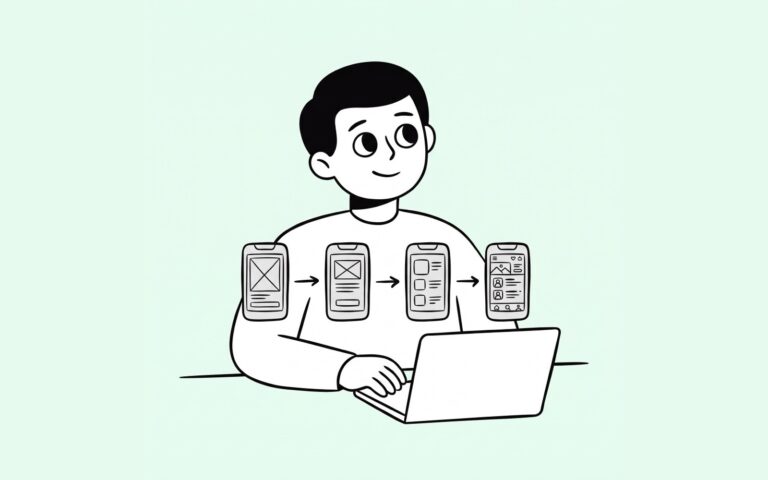
- Pilot it: do not switch everything at once. Start with a test on a few incoming and outgoing invoices.
- Train your teams: accounting, sales and administration have to understand the new approval circuit.
- Think about archiving and compliance: put a compliant digital archiving solution in place.
Electronic invoicing audit: our support for small and mid-sized companies and accounting firms.
Does the checklist look complex? That is normal. At Bonne Idée, we turn this regulatory obligation into an opportunity for your organisation.
With Bonne Idée, you get local, human and technical support. Note that we do not replace your accountant: we help them do their work faster and better, for you.
Who is it for?
We pay particular attention to:
- Craft businesses.
- Small and mid-sized companies.
- B2B service companies.
- Organisations that already invoice, but with no technical visibility on the reform.
Our four-step approach to your compliance
- A quick check (15 to 30 minutes): we analyse your current system.
- A clear proposal: we identify the upgrades needed.
- The work itself: we step in to ensure compliance.
- Simple follow-up: we provide accessible follow-up so the arrangement lasts.
The benefits for your company
- Less time spent processing invoices by hand.
- Less risk of rejection or of flows being blocked with your partners.
- Peace of mind before the regulatory date.
- Credit with your accountant, your clients and the tax authority.
Book your free audit
Stop enduring the reform, prepare for it.
We offer a free audit of 15 to 30 minutes, on site in Orléans and the Loiret or by video call.
There is no commitment. You have nothing to lose, just a useful check to secure the future of your invoicing.
Frequently asked questions about the reform
Do I have to change my invoicing software?
Not necessarily. Changing is not compulsory: what matters is that your tool is connected to an approved platform (PPF or PDP) and that the formats are compliant.
And if I only do B2C?
Even if you sell to private individuals, you will not be subject to electronic invoicing, but you will be concerned by e-reporting. You will have to transmit certain transaction data to the tax authority.
And my accountant?
We often work with accounting firms. We give them a clear, shareable report, you keep control, they keep the compliance.